 Plant Decoded
Why are my plant’s leaves turning yellow?
The pattern of the yellow is a clue. Here’s how to read it.
 By
Short answer
Yellow leaves usually mean the leaf is losing chlorophyll, and where the yellow shows up tells you why. Old lower leaves yellowing first points to nitrogen shortage or normal ageing. Young leaves turning yellow with green veins suggests iron. Yellow leaves plus soggy soil almost always means overwatering.
First, look at which leaves are yellow
This one detail does most of the diagnosis for you. Plants can move some nutrients, like nitrogen and magnesium, out of older leaves to feed new growth. So when those nutrients run short, the old lower leaves turn yellow first while the new ones stay green.
Other nutrients, like iron, can’t move around easily. When those run short, it’s the newest leaves that suffer first. Yellowing between green veins on young leaves is the classic sign, and it has a name: chlorosis.
The five most common causes
1. Overwatering
The most common cause of yellow leaves on houseplants by far. Soggy soil starves roots of oxygen, damaged roots stop taking up nutrients, and leaves yellow and droop. If the soil has been wet for days, start here. Our note on what overwatering actually does explains why.
2. Normal ageing
Every leaf has a lifespan. If just one or two of the oldest, lowest leaves turn yellow while the rest of the plant looks healthy and is putting out new growth, that’s normal. The plant is recycling nutrients from leaves it no longer needs.
3. Not enough nitrogen
Older leaves turn evenly pale yellow, starting at the bottom and moving up, and growth slows. Common in plants that haven’t been repotted or fed in a long time.
4. Not enough light
In dim spots, plants can’t support all their leaves, so they drop the ones that are pulling their weight least, usually the lower, shaded ones. Often comes with leggy, stretched growth.
5. Iron that the plant can’t reach
Yellow young leaves with green veins. Often the soil has iron, but it’s too alkaline for the roots to take it up. Hard tap water can slowly push soil in that direction.
A quick way to diagnose your plant
| What you see | Likely cause | What to try |
|---|---|---|
| Yellow leaves, soil still wet days after watering | Overwatering | Let the soil dry out, check the pot drains, check roots for rot |
| One or two old leaves yellowing, plenty of new growth | Normal ageing | Nothing. Remove the leaf once it’s fully yellow |
| Older leaves evenly pale, growth slowing | Nitrogen shortage | Feed with a balanced fertiliser during the growing season |
| Lower leaves yellow, stems stretched and leaning | Not enough light | Move closer to a bright window |
| New leaves yellow with green veins | Iron not available | Use rainwater or filtered water, try a chelated iron feed |
Can a yellow leaf turn green again?
Usually not once it’s fully yellow. By then the plant has already taken back most of the useful nutrients from it. Leaves that are only slightly pale from a mild shortage can green up again once you fix the cause. Either way, new growth will show you whether you got it right.
 For the curious
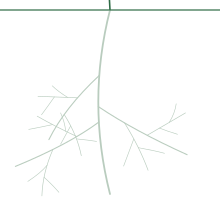
Below the surface: where the green goes
A chlorophyll molecule has a magnesium atom at its centre and four nitrogen atoms holding it in place. Building it also needs iron along the way. Short on any of these, and the plant can’t make enough chlorophyll, so the leaf fades.
When a leaf is old, stressed or no longer worth keeping, the plant actively takes its chlorophyll apart and moves the nitrogen and other nutrients elsewhere. This is called senescence. As the green disappears, yellow pigments called carotenoids, which were there all along, finally show through. It’s the same thing that happens to trees in autumn, just one leaf at a time.
How sure are we?
Quick questions
Should I cut off yellow leaves?
Yes, once a leaf is fully yellow it’s fine to remove it. It won’t turn green again, and removing it keeps the plant tidy.
Can too much sun cause yellow leaves?
Yes. Strong direct sun can bleach leaves pale yellow or white, usually on the side facing the window.
Does tap water make leaves yellow?
Sometimes. Very hard water can make soil more alkaline over time, which locks up iron and causes yellow new leaves.
Sources
- Rengel Z, Cakmak I, White PJ, eds. (2023). Marschner’s Mineral Nutrition of Plants, 4th edition. Academic Press.
- Taiz L, Zeiger E, Møller IM, Murphy A (2015). Plant Physiology and Development, 6th edition. Sinauer Associates.
Spotted something that looks wrong? Email hello@plantdecoded.com and it’ll be checked and corrected.